Why artificial insemination?
Sometimes mating isn’t an option — the sire can’t mate, the dam won’t allow mating, or frozen or chilled semen from the sire needs to be used. Artificial insemination (AI) is a good alternative in these circumstances.
How we do it
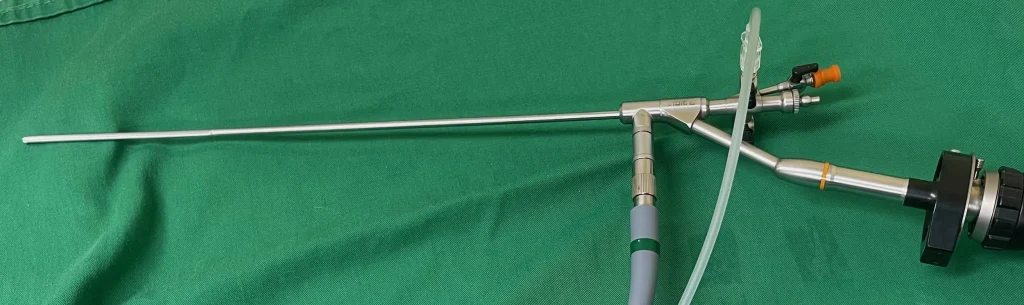
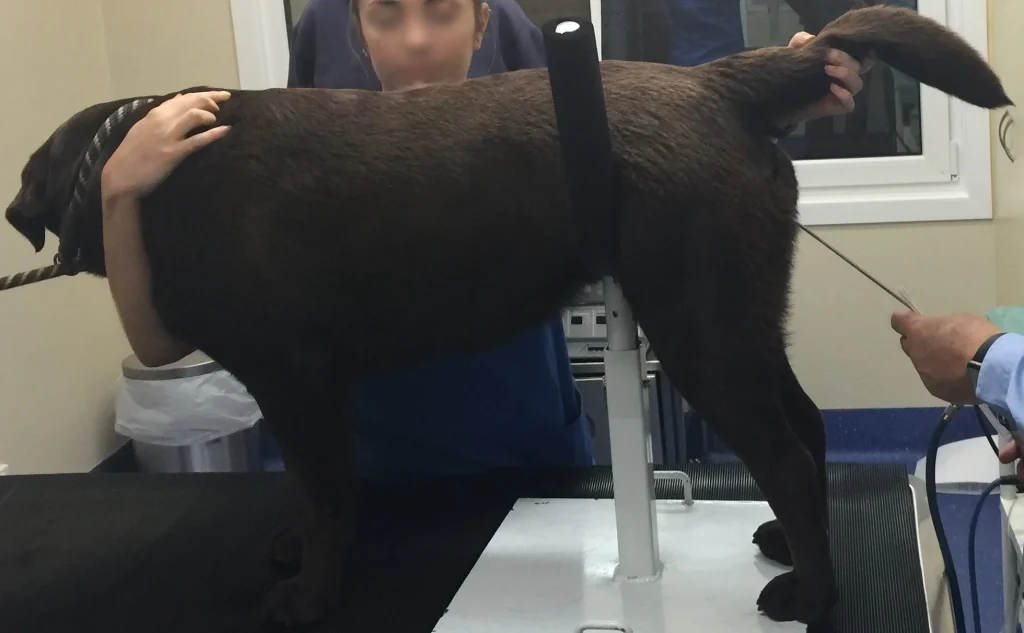
We only perform transcervical artificial inseminations (TCI) and have been doing them since 1994. Dr Watts was the third person in the world to perform TCI with endoscopy. We use an endoscope to see the cervix and pass a catheter through it into the uterus. It is done with the bitch conscious and standing — no anaesthetic — and you can be present. She needs to stay standing for 5 minutes afterwards.
Progesterone testing is required before every insemination. We analyse the semen at the time of insemination so you can see the quality being used, and send you a report with recommended dates for a pregnancy ultrasound (to confirm pregnancy), pregnancy radiographs (to count pups) and the expected whelping date.
We do not perform vaginal or surgical inseminations. Vaginal insemination is, in our opinion, an inferior technique — semen is normally deposited into the uterus during mating. Surgical insemination is unnecessary when a non-invasive option exists.
Types of semen
We can inseminate with fresh, chilled or frozen semen. Results with chilled semen should be as good as with fresh. If you have the choice between chilled and frozen, always choose chilled.
Fresh semen
~90%
Used when the dog is easily accessible and a natural mating can’t take place. With good sperm, the chance of pregnancy should be at least around 90%.
Chilled semen
Near fresh
Used when the dog is interstate. Semen is extended and chilled to refrigerator temperature; sperm generally live 2–4 days, sometimes up to a week. We time ovulation with progesterone tests, then organise collection with the stud owner and their vet. Two inseminations may be performed a day apart.
Frozen semen
50–70%
Used when the dog is overseas or has died. Freezing damages sperm so they survive less time in the reproductive tract — close monitoring and at least two inseminations a day apart are needed.